What Is a Property Encroachment and What Can You Do About It?
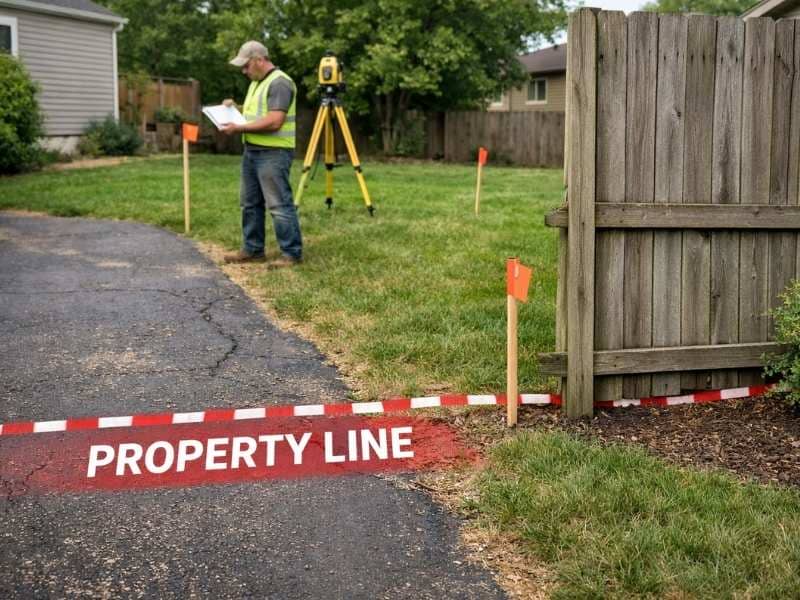
Property disputes between neighbors are more common than most people realize. One of the most frequent causes is an encroachment, and many property owners do not even know they have one until a survey is done or a sale falls through.
An encroachment happens when a structure or object crosses over a property line onto land that belongs to someone else. It does not have to be intentional. Most happen by accident, when a fence gets built in the wrong spot or a driveway gets paved a few feet too wide. But whether intentional or not, an encroachment is a legal issue that needs to be addressed.
Common Types of Property Encroachments
Encroachments come in many forms. Some are easy to spot. Others go unnoticed for years.
Fences
A fence built even a foot or two over a property line is one of the most common encroachments. It often happens becawuse the owner assumed where the line was instead of having it properly marked by a surveyor.
Buildings and Structures
A garage, shed, or addition that extends beyond the property line is a serious encroachment. These are harder to deal with because they involve permanent structures.
Driveways and Pavement
A driveway poured slightly too wide can cross into a neighbor’s yard. This type is easy to miss but shows up clearly on a survey.
Overhanging Trees and Landscaping
Tree branches that hang over a property line or roots that spread beneath it are encroachments in many states. Retaining walls, steps, and landscaping features can also cross property lines.
How Are Encroachments Discovered?
Most encroachments are discovered in one of three ways:
During a land survey. A boundary or ALTA survey shows the exact location of all structures relative to the property lines. This is the most reliable way to find out whether an encroachment exists and how significant it is.
During a real estate transaction. Lenders and title companies often catch encroachments when reviewing survey documents before closing. This can delay or derail a sale if not resolved quickly.
During a neighbor dispute. Sometimes a disagreement between neighbors is what triggers a survey, and the survey reveals an encroachment that neither party was aware of.
What Happens If You Ignore an Encroachment?
Ignoring an encroachment does not make it go away. It can actually make things worse.
It can complicate the sale of your property. Buyers, lenders, and title companies will flag an unresolved encroachment and may refuse to move forward until it is fixed.
In some states, a person who uses a strip of your land openly for long enough may eventually claim legal rights to it. This is called adverse possession. The time period required varies by state, but the risk grows the longer an encroachment is left alone.
The longer an encroachment stands, the harder and more expensive it is to resolve.
What Can You Do About a Property Encroachment?
If you discover a property encroachment, your first step is to get a licensed land survey to confirm the exact location of the property lines. Once you have that documentation, you can approach the situation through a neighborly agreement, a formal easement, or legal action if needed.
Step 1: Get a Survey
Before doing anything else, make sure you have a current, accurate boundary survey. You need documented proof of where the property lines are before you can make any legal claim or have a productive conversation with your neighbor.
Step 2: Talk to Your Neighbor
Most encroachments are not intentional. A calm, factual conversation backed by survey documentation often leads to a quick resolution. The neighbor may agree to remove the fence, adjust the driveway, or trim the overhanging branches.
Step 3: Consider a Written Agreement
If the encroaching structure is difficult or expensive to remove, both parties may agree to handle it through a formal encroachment agreement. This is a legal document that acknowledges the encroachment, defines the terms under which it can remain, and protects both parties.
Some property owners choose to grant a neighbor an easement over the affected strip of land instead. This is a more permanent solution that is recorded with the county and stays with the property.
Step 4: Contact an Attorney
If the neighbor refuses to cooperate or the encroachment involves a major structure, you may need legal help. A real estate attorney can advise you on your rights and help you pursue a resolution through the courts if necessary.
What If You Are the One Encroaching?
Finding out your structure crosses a property line is stressful, but it is better to know.
- Do not remove anything until you have talked to the neighbor and possibly an attorney
- Review the survey to understand exactly how much the encroachment measures
- Consider whether the structure can be adjusted or whether a formal agreement makes more sense
- Act in good faith and communicate openly. Most neighbor encroachments are resolved without going to court.
The worst thing you can do is ignore the problem after it has been raised.
How Much Does It Cost to Resolve an Encroachment?
The cost depends on what kind of encroachment it is and how it gets resolved.
- Survey to confirm the issue: $300 to $1,500 depending on property size
- Moving a fence: Typically $500 to $2,000 depending on length and materials
- Legal fees if a dispute goes to court: Varies widely, but can reach thousands of dollars
- Formal encroachment agreement or easement: Usually a few hundred dollars in legal and recording fees
Resolving an encroachment early and informally is almost always cheaper than letting it become a legal dispute.
Frequently Asked Questions
Can my neighbor force me to remove a structure that encroaches on their property?
Yes. A property owner has the legal right to require the removal of any structure that crosses their property line. If you refuse, they can take the matter to court and a judge can order removal, sometimes at your expense.
How do I know if my fence is on the property line?
The only reliable way to know is to have a licensed land surveyor locate and mark your property corners. Do not rely on an old fence line or a neighbor’s claim about where the line is.
Does homeowners insurance cover encroachment disputes?
Generally no. Most homeowners insurance policies do not cover legal disputes over property lines. You would typically need to pay legal and survey costs out of pocket.
Can an encroachment affect my ability to sell my home?
Yes. Unresolved encroachments are a common reason real estate transactions get delayed or fall through. Lenders and title companies flag them during the closing process.