
What Is a Property Easement and How Does It Affect Your Land?
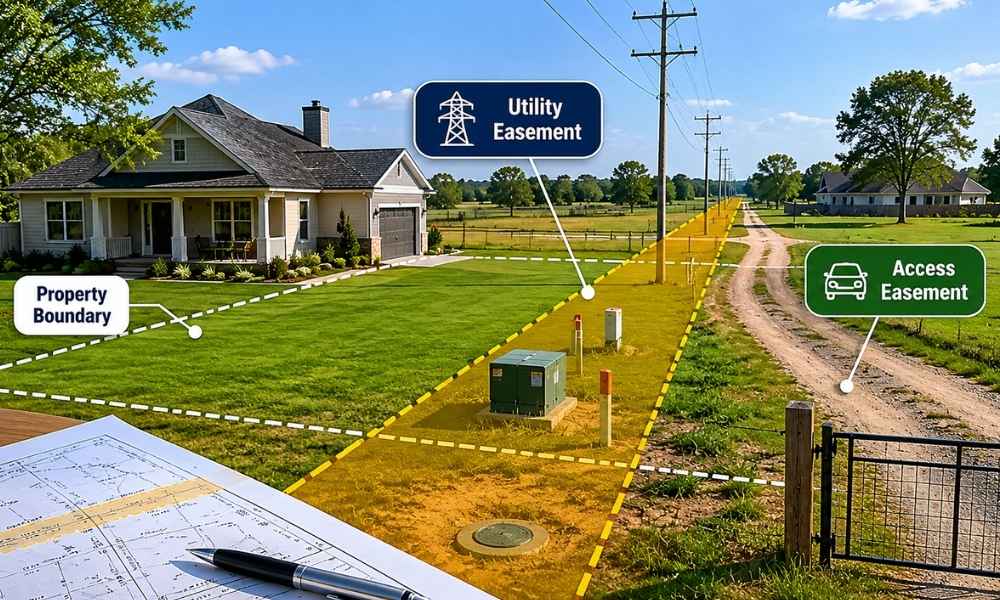
When you buy a piece of land, you expect to own everything on it and have full say over how it is used. But that is not always the case. Some properties come with easements attached, and if you do not know about them, you could be in for a big surprise.
An easement is a legal right that allows someone else to use part of your property for a specific purpose. The person or organization holding the easement does not own your land. They simply have the right to use a portion of it in a certain way. That right stays with the land, which means it transfers to the new owner when the property is sold.
Why Do Easements Exist?
Easements exist because land is not always arranged in a way that gives everyone fair access to what they need. A neighbor’s property might be completely surrounded by other lots with no road access. A utility company may need to run a power line across private land to reach a neighborhood. A city may need a strip of land for a drainage pipe.
Rather than forcing a sale of part of the land, the law allows these needs to be met through an easement. The property owner keeps ownership. The other party gets limited, specific use rights.
Common Types of Property Easements
Utility Easements
Utility easements are the most common type. They give power companies, water authorities, cable providers, and other utilities the right to install and maintain lines, pipes, and equipment on your property.
If you have overhead power lines crossing your yard or a water main running under your driveway, there is likely a utility easement in place. You cannot build a permanent structure, like a garage or shed, over or within the easement area without permission.
Access Easements (Right-of-Way)
An access easement gives someone the legal right to cross your property to reach another location. This is common in rural areas where one property sits behind another with no direct road access.
For example, if your neighbor’s land is landlocked behind yours, they may have a legal right to drive across a section of your property to reach the public road. That right cannot be taken away, even if you sell your land to someone else.
Drainage Easements
Drainage easements allow water to flow across a section of property through pipes, ditches, or natural channels. Local governments and developers often create these to manage stormwater in neighborhoods. Property owners within a drainage easement area usually cannot fill in ditches, block flow paths, or plant large trees that could damage drainage infrastructure.
Conservation Easements
A conservation easement is a voluntary agreement between a landowner and a land trust or government agency. The owner keeps the property but gives up the right to develop it in ways that would harm its natural or agricultural value. These protect forests, wetlands, farmland, and scenic land.
How Is an Easement Created?
Easements can be created in several ways:
- By deed. The most common way. The easement is written into the property deed or a separate recorded document.
- By plat. When land is subdivided, the plat map often shows utility and access easements for each lot.
- By necessity. A court can grant an easement when a property has no legal way to reach a public road.
- By prescription. If someone uses part of your land openly for a long period without permission, they may be able to claim a legal right to continue. The required time period varies by state.
How Does an Easement Affect Your Property?
An easement limits what you can do with the portion of your land it covers. You still own the land, but you cannot interfere with the easement holder’s legal right to use it. This can affect where you build structures, where you plant trees, and in some cases, the value of your property.
Here is what easements mean in practical terms:
- You cannot build a structure in an easement area without written approval from the easement holder
- The easement holder may enter your property to maintain equipment or infrastructure
- You are still responsible for property taxes on the easement area
- If you violate an easement, you can be taken to court and required to remove whatever was built
Most easements only affect a narrow strip of land, not the entire property.
How Do You Find Out If Your Property Has an Easement?
- Check the deed. Easements are often listed in the property deed or chain of title documents.
- Review the plat map. The recorded plat for your subdivision usually shows easements on each lot.
- Order a title search. A title company can identify all recorded easements in the ownership history.
- Get a survey. An ALTA survey is the most thorough option. It shows exactly where each easement sits on the ground.
If you are buying property, always check for easements before closing. Some are obvious. Others only appear through a careful title search or survey.
Can an Easement Be Removed?
Yes, but it takes a formal process. An easement can end if the holder gives up the right in writing, the purpose no longer exists, both parties agree to end it, or a court orders its removal. Simply ignoring an easement for years does not cancel it. One created by deed stays on record until it is formally released.
Frequently Asked Questions
Can I fence off an easement area on my property?
It depends on the type of easement. For utility easements, you may be able to install a fence but must leave access for maintenance crews. Check the easement language before putting up any barriers.
Does an easement lower my property value?
It can, depending on the type and location. A small utility easement along the back edge of a lot typically has little impact. A large access easement that cuts through the middle of a yard can reduce usable space and affect resale value.
What if someone is using my land without an easement?
That is called an encroachment, and it is a separate legal issue from an easement. You should contact a licensed surveyor to document the situation and speak with an attorney about your options.
Do easements show up on a property survey?
Yes, depending on the survey type. A boundary survey notes recorded easements in the legal description. An ALTA survey shows them on the map with their exact location and dimensions.